Most construction teams already take a large number of photos. The problem is rarely a complete lack of images. The problem is finding the right image when a question comes up.
A superintendent may have photos on a phone. A project manager may receive another set through text or email. An owner update may contain a few selected images, while hundreds of others sit in folders with file names that provide little information about the date, location, or subject.
That system may work during the current week. Months later, it can become difficult to answer a simple question: What did this area look like before the next phase of construction began?
An organized construction progress photography system gives contractors, owners, and project teams a repeatable way to capture, find, compare, and share visual information throughout the life of a project.
Why Scattered Construction Photos Create Extra Work
When construction photos live in several different places, someone eventually has to gather and organize them.
That often happens before an owner meeting, schedule discussion, progress report, or project review. Even after the images are collected, the team may still have to determine when each photo was taken and which part of the project it shows.
Common problems include:
- Images divided among personal and company phones
- Photos buried in text messages or email threads
- Duplicate or camera-generated file names such as IMG_1042
- No clear separation between progress, quality-control, safety, and marketing photos
- Different camera positions during every site visit
- Folders with no consistent naming convention
- Large files that are difficult to quickly email or upload
The result is more than an untidy photo archive. It can slow down communication and make it harder for owners, project managers, superintendents, and design teams to understand current site conditions.
A consistent construction photo record makes those images easier to use later.
Start With a Simple Folder Structure
The best construction photo organization system is one the project team will actually use.
A complicated filing method may work for a few weeks and then fall apart as the project gets busier. A simple structure should make it easy to identify the project, visit date, and type of photograph.
A practical hierarchy might look like:
Project Name > Visit Date > Aerial / Ground / Web-Ready Photos
Using a date format such as 2026-10-06 keeps site visits in chronological order.
Descriptive file names can make individual photographs easier to locate as well.
Instead of:
DJI_0427.jpg
A file could be labeled:
Northwest-Corner_2026-10-06.jpg
or:
Building-A-East-Elevation_2026-10-06.jpg
Small improvements in organization become increasingly valuable as months of construction photos begin to accumulate.
Use Repeatable Drone Photography Viewpoints
Organization begins before the images ever reach a folder.
If every construction drone photography visit uses completely different angles, comparing progress becomes more difficult. The reviewer first has to determine where the image was taken before focusing on what changed.
Repeatable aerial viewpoints make those comparisons much easier.
A typical construction progress photography visit may include:
- Wide views from the four corners of the site
- A straight-down overview when appropriate
- Consistent building elevations
- The primary construction entrance
- Parking and paving areas
- Material staging locations
- Major sitework areas
- Current milestone work
The exact viewpoints should depend on the project.
A commercial addition, industrial facility, site-development project, and ground-up building will not need identical coverage. The goal is to establish the important views early and repeat them as consistently as practical throughout construction.
Why Aerial Photos Are Useful for Construction Progress
Ground photography provides important details, but it can be difficult to understand an entire construction site from ground level.
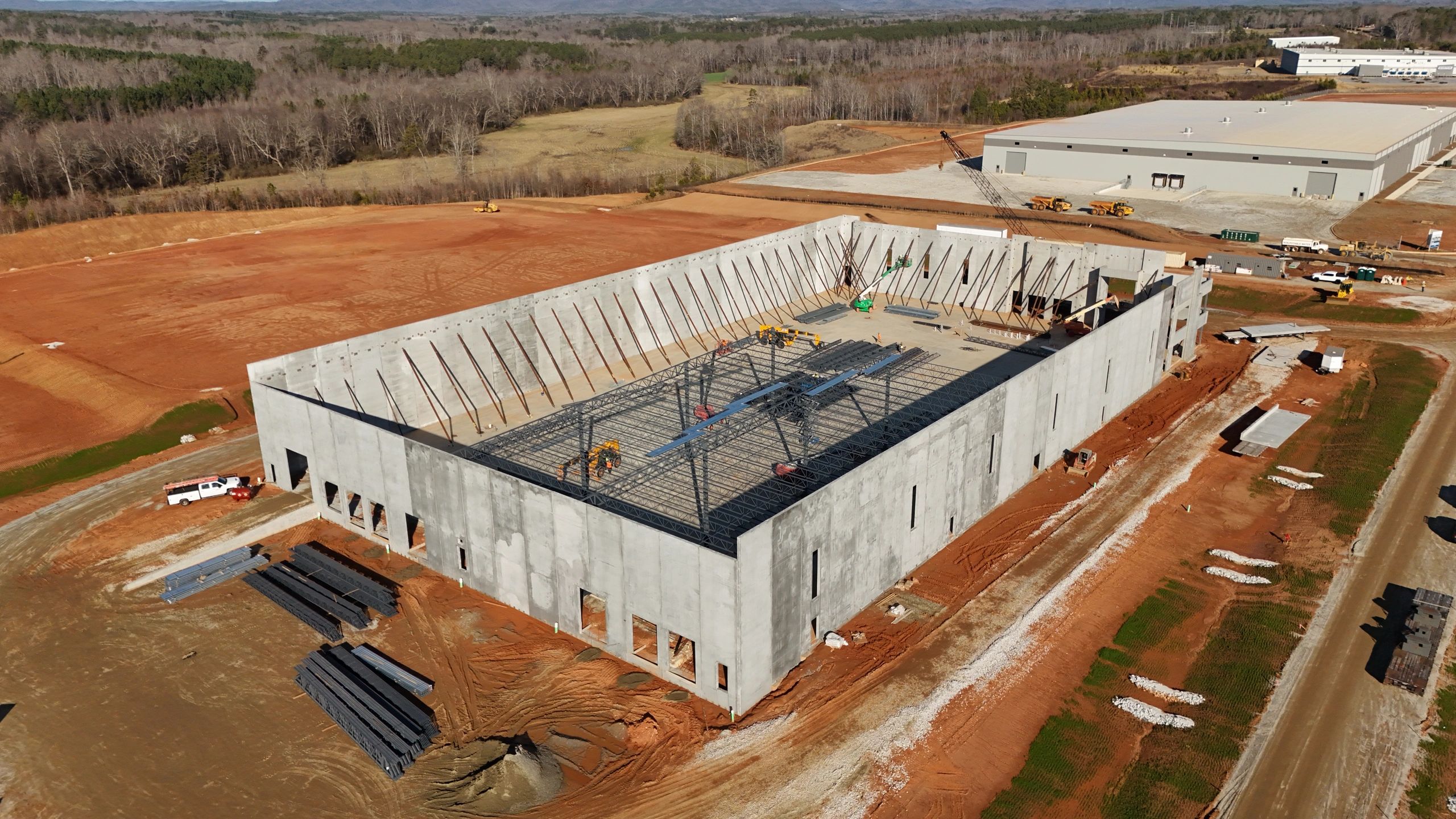
Drone photography for construction sites provides a wider perspective.
Aerial images can help document:
- Overall site development
- Building footprint and structural progress
- Grading and drainage
- Parking areas and paving
- Utility and sitework progress
- Material storage and staging
- Access routes
- Landscaping and exterior improvements
- Relationships between different areas of the project
This can be especially useful when communicating with owners, developers, architects, consultants, and other stakeholders who may not regularly visit the site.
One well-planned aerial image can provide context that may require several ground-level photographs to explain.
Separate the Project Archive From the Owner Update
The full construction photo archive and the photos included in an owner update have different purposes.
The archive should preserve the agreed visual record of the project.
The owner update should make current progress easy to understand.
Sending every photograph to every stakeholder can create more work rather than less. A smaller selection of useful images is often better for meetings, emails, and progress reports.
A construction photography delivery can include:
- High-resolution images for the project archive
- Web-ready versions for email and project platforms
- A smaller selection of current progress photos
- Date-organized folders
- Repeatable aerial viewpoints from previous visits
This gives the project team access to the full record while keeping regular updates simple and easy to review.
Decide What Each Construction Photo Is For
Not every construction image serves the same purpose.
Before a site visit, it helps to understand how the photographs may eventually be used.
Owner Updates
Owner-update photography should clearly show visible progress and major changes without requiring a lengthy explanation.
Construction Documentation
Progress documentation should focus on consistency, recognizable locations, and useful project context.
Project Meetings
Project teams may benefit from wide site overviews along with closer photographs of active construction areas.
Marketing
Professional aerial and ground photography can also provide approved content for company websites, proposals, project announcements, and social media.
Project Closeout
Final aerial and ground photography can document the completed property while also creating professional images the contractor, owner, or developer can continue using after turnover.
Planning for these different uses before the photos are taken can make each site visit more valuable.
How Often Should Construction Progress Photos Be Taken?
There is no single photography schedule that works for every construction project.
Depending on the project, progress photography may be scheduled:
- Weekly
- Every two weeks
- Monthly
- At major construction milestones
- Before significant work is concealed
- Before and after major site changes
- At substantial completion
- At final completion
Large or fast-moving projects may benefit from recurring visits. Smaller projects may only need photography at important milestones.
A project team can also start with one construction progress visit before deciding whether recurring documentation would be useful.
Build the System Before the Photo Archive Becomes Unmanageable
The easiest time to establish a construction photo system is at the beginning of the project. The second-best time is now.
Choose a folder structure, identify the most important viewpoints, and decide how photos will be delivered and stored. Then use the same process from one visit to the next.
Consistency is more important than complexity.
Professional construction progress photography can also reduce some of the burden on the field team by providing a repeatable set of aerial and ground images in organized, date-labeled folders.
It does not replace required inspections, daily reports, or detailed field documentation.
Instead, it creates a clear site-wide visual record that is easier to compare, review, and share.
Construction Progress Photography in Upstate South Carolina
Owens Aerial provides construction progress photography and construction drone services for general contractors, developers, owners, and project teams throughout Greenville, Simpsonville, Fountain Inn, Laurens, Anderson, Spartanburg, Greenwood, Easley, Seneca, and surrounding areas of Upstate South Carolina.
Construction photography services can include:
- Aerial progress photography
- Ground-level construction photography
- Repeatable site viewpoints
- Construction milestone photography
- Owner-update images
- High-resolution project archives
- Web-ready photographs
- Final project and closeout photography
Start With One Construction Progress Visit
You do not have to commit to a recurring photography schedule to get started.
Tell Owens Aerial where the project is located, what stage of construction it is currently in, and what your team needs the photos to communicate.
Owens Aerial can recommend a practical first-visit scope based on the project and provide a written quote before scheduling.
Request a Construction Photography Quote
Contact Owens Aerial to discuss your project and get a quote for construction progress photography in Greenville and throughout Upstate South Carolina.